

Parenting Your Business: The Role of Humility in Leadership
“My business is like my baby.” The analogy is common among business owners and founders – and it is understandable. You “conceive” the idea for a business. Then you “give birth” to the business. You nurture it so that it “grows.” And, like a baby, your business demands incredible time, effort, resources, attention, and sacrifice. This is all fine and well and good … until it’s not. Here’s the problem in a nutshell: owners and founders can feel a deep need to protect and control their business “baby.” Consequently, they may fail to give their leadership team members appropriate responsibility and authority within and for the business. This can play out in many ways, such as: You can already see how such situations invariably inhibit the growth of a business. By failing to “let go” and let others fulfill leadership roles, an owner/founder effectively stifles innovation, trust, collaboration, and a host
Feeling Lost? Get Your Vision and Traction Back with EOS
As a business owner or leader, have you ever felt like your company’s purpose was somewhat in the dark without a clear direction? You had a vision when you started, but over time issues and people seem to be pulling it in different directions. Maybe priorities are getting mixed up and you can’t even figure out what’s most important. The loss of alignment creates tension, mixed messages, and stalled progress. If this sounds familiar, you’re likely experiencing one of the biggest frustrations that the Entrepreneurial Operating System (EOS) is designed to solve – Loss of Direction. It’s a common challenge that many entrepreneurs face, but I’ve seen firsthand how EOS can transform businesses and solve issues just like this. Is Your Business Suffering from Loss of Direction? One of the biggest reasons behind the loss of direction in a company is a lack of alignment. When your team isn’t on the
Data Component: Playing to Win
The Power of Data in EOS: Leveraging Leading Indicators to Win As an EOS Implementer, I often emphasize the importance of the Data Component in the Entrepreneurial Operating System (EOS). This critical component, embodied by the Scorecard, serves as a vital tool for business owners and leadership teams. It helps them monitor performance, anticipate issues, and drive success. Today, I want to delve into the nuances of the Scorecard, focusing on how it provides early indicators of change, highlights trouble spots, and distinguishes between playing to win and playing not to lose. The Role of the Scorecard in EOS The Scorecard in EOS serves two main purposes: Identifying when you’re off course: The Scorecard acts as a business’s GPS, alerting you when things are deviating from the planned route. By tracking specific metrics, it signals when corrective actions are needed to steer the company back on track. Showing that the
Ownership Mindset: How your staff could help maximize the value of your business if only you’d let them
In our experience, one of the biggest obstacles faced by owner-managers looking to plan strategic exit from their company is that of a leaving a well-managed organization capable not only of carrying on without them but of growing and developing in the future. THE RISKS OF NOT HAVING YOUR STAFF ENGAGED We’ve often touched on the subject of employee engagement and how a lack of engagement can have a negative impact on the profitability of your business. But the fact is that poor employee engagement can also make your company less attractive to investment from potential buyers. Business owners are often puzzled by the lack of commitment shown by their staff but it’s easy to understand if you take a closer look at the potential mismatch between the employer’s and employees’ concerns. Typically, owners are losing sleep over business issues like sales, cash flow, profits, and competition, whereas employees have
MILITARY VETERAN ENTREPRENEURS: PART 4
This is the fourth and final in a series of four short papers centering around military veterans who own and/or founded businesses in Colorado. The papers are based on discussions with military veterans who founded and/or currently own companies in Colorado. The purpose of these papers is to examine three areas unique to military veteran business owners/founders. 1) How mentoring and networking played a role (or not) in their success; 2) hiring and retaining fellow veterans as employees; and 3) leveraging their veteran-owned status in their business. The final paper presents perspectives on the pros and cons of the veterans’ businesses being in Colorado and advice they would share with other military veteran business owners. TOPIC 4: Supporting Veteran-Owned Businesses in Colorado: Pros and Cons of Being in Colorado / Advice for other Colorado-based Veteran-owned Businesses What are the pros and cons of your business being in the State of
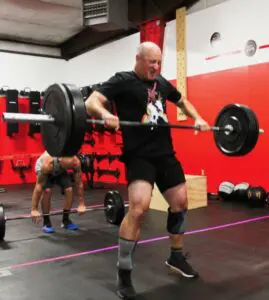
Gyms, Spas and Coaches
I’m a long-time member of Entrepreneurs’ Organization. It’s called “EO” for short, just one letter away from “EOS”…easily confused, I know – but two distinct organizations. EO is member-led. There is support staff – but much of the value of EO is generated by its members who serve in various leadership positions. In EO, we say “We are more like a gym than a spa.” When you purchase a gym membership, you essentially purchase the right to work out at the facility. You pay for the privilege of doing the work. At spas, customers pay to receive services. Massage, assisted stretching, facials, saunas, hot stones…you name it – these services are delivered to the paying customer without them doing much if any of the work. This gym/spa metaphor applies to EOS as well, I think. If you are implementing EOS in your business, you are doing the work of stepping