
The Hidden Costs of Not Running Your Business on EOS®
Most business owners instinctively know when something feels off in their organization. They’ll see the symptoms: missed targets, unproductive meetings, team misalignment, and the constant feeling of working harder but getting nowhere. What’s harder to see is the actual cost of letting these issues continue. The Hidden Tax of Business as Usual Before discovering EOS®, I led a team of 650 people. Sometimes, I could feel something wasn’t right, but I couldn’t put my finger on the problem. Unfortunately, that often meant I was paying a tax I couldn’t see. But unlike other business expenses, the cost of not having a system was hiding in plain sight. Every unproductive meeting that could’ve been an email. Whenever someone needed clarification on unclear directions or had to track down who was responsible for a task. Every employee we had to replace when another team member left. Those all impacted the bottom line.
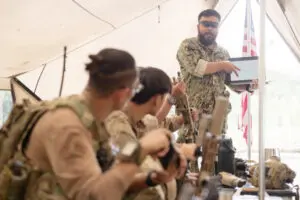
EOS and the 5 Paragraph Order: Same Mission, Different Language
If you’ve worn the uniform, you know the 5 Paragraph Order like muscle memory (and for the civilians out there, of course there’s an acronym): SMEAC—Situation, Mission, Execution, Admin & Logistics, Command & Signal. It’s the framework that brings calm to chaos, clarity to confusion, and a plan to any mission. And guess what? EOS® is doing the same thing for your business. It just uses different words. Once you see the overlap, you’ll realize—EOS isn’t reinventing the wheel. It’s just speaking civilian. Let’s Line It Up: Situation = Vision In the military, you start with the context—what’s happening around us, what the terrain looks like, who’s friendly, who’s not. In EOS, this is your Vision/Traction Organizer (V/TO). It answers: Same principle: give your team the why before the how. Mission = 10-Year Target / 1-Year Plan Your mission is the heartbeat of your op order: clear, concise, achievable. Same with EOS. Your 10-Year Target, 3-Year Picture, and 1-Year

The Accountability Chart: Fixing What Your Org Chart Messed Up
Let’s talk about a tool that fixes one of the biggest hidden problems in most businesses: nobody knows who’s really accountable for what. You’ve probably got an org chart somewhere—probably made in PowerPoint during a leadership retreat nobody remembers. And let’s be honest: it’s mostly titles, boxes, and a whole lot of guessing. That’s why in EOS®, we ditch the org chart and build something way more useful: The Accountability Chart. What It Is (and Isn’t) The Accountability Chart is not about titles, politics, or seniority. It’s not about who’s been here the longest or whose name is on the truck. It’s about defining what the business needs—then putting the right people in the right seats to get the job done. We start by asking: “To grow and thrive the business over the next 6-12 months—what structure would it need?” And we build from there. Why It Matters for Veteran-Owned Businesses In the military, you
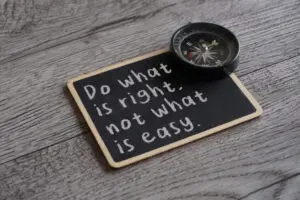
Core Values: Not Fluff. Not Optional.
Let’s get one thing straight: Core Values are not some corporate BS you stick on a wall and forget about. If you’re a veteran, you know what real core values look like. They’re not just words—they’re lived. Day in, day out. They guide behavior, drive decisions, and define who’s in and who’s out. In EOS®, we treat Core Values the same way. They are the heartbeat of your company culture—and if you’re not using them, you’re navigating without a compass. (You might stumble upon the culture you want but it won’t be intentional.) So, What Are Core Values? They’re the handful of guiding principles that define who you are at the core. Not who you aspire to be. Who you actually are—on your best day. And who you want to be surrounded by. These aren’t just nice-sounding words. Or things that are table stakes. They’re specific to your team, your DNA. If you’re a veteran-owned business,

Why Your Team Meetings Suck—and How a Level 10 Can Fix It
Let’s be honest—most meetings are a waste of time. They drag. People ramble. Nothing really gets decided. And when it’s over, you’re not sure what just happened, but you know you’re 90 minutes closer to burnout. Sound familiar? If you’re a veteran-owned business, you’ve seen what a real briefing looks like. Clear, purposeful, and mission-driven. That’s the energy we bring to the Level 10 Meeting in EOS®—and it changes everything. What Is a Level 10 Meeting? It’s a weekly, 90-minute tactical meeting with your leadership team. Same day, same time, same agenda—every week. Predictable? Yes. Boring? Not even close. It’s called a “Level 10” because, if you do it right, your team will rate it a 10 out of 10 every time. And if they don’t? You fix it. Because that’s the EOS way: real talk, real accountability, real results. The Agenda That Actually Works Here’s what you cover every week: That’s

The 5 Leadership Abilities: What Every Veteran-Owned Business Needs to Break Through
As a veteran, you know discipline, structure, and teamwork. You’ve operated in high-stakes environments and gotten the job done when it mattered most. So when you start or run a business, you’d think those skills would carry you all the way through—and honestly, they get you pretty far. But then, out of nowhere… you hit the ceiling. It’s not a character flaw. It’s just business. At some point, every business owner—yes, even the battle-tested ones—hits a point where things stall. Growth slows. Team alignment slips. You’re working harder than ever but getting less return. Sound familiar? The good news: there’s a playbook for breaking through. In EOS®, we call it the 5 Leadership Abilities. If you’re running a veteran-owned business, these aren’t just abstract concepts—they’re mission-critical. In the military, clarity saves lives. In business, it saves time, money, and frustration. The longer you’re in business, the more complicated things can get.