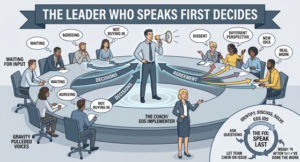
The leader answered. The team nodded.
That was the whole pattern.
Every issue, every decision — eyes swung to him, he weighed in, and the room agreed. Clean. Quick. Done.
It looked like alignment. It wasn’t.
I pulled him aside and told him what I was seeing. The team wasn’t thinking — they were waiting. Agreeing is not the same as buying in. If they never get heard, they never really own the answer.
He sat with it.
The next session, he stayed quiet. We pulled input from every seat. He waited until the team had wrestled with the issue before he said a word.
What happened changed the room.
The team produced a better answer than he would have. He said so himself.
Here’s what I’ve learned.
The leader who speaks first decides for the team — even when they don’t mean to. A strong voice pulls every other voice toward it. That’s not leadership. That’s gravity.
The fix is simple. Speak last.
Let the team chew on the issue. Ask questions instead of giving answers. Weigh in only after they’ve done the real work.
I’ve seen this with strong founders. I’ve seen it with brand-new leaders running their first team. The dynamic doesn’t care about experience. It cares about who talks first.
In EOS we call this part of IDS — Identify, Discuss, Solve. The “Discuss” only works if more than one voice is in it.
If your team keeps agreeing with you, check the seating chart.
You might be the one deciding — without meaning to.
When was the last time someone on your team pushed back — and changed your mind?
#EOSTraction #EOSImplementer #Leadership #LeadershipTeam #DecisionMaking #Groupthink #L10Meeting #FounderCEO