

What if you could increase your employees’ productivity by 17% without spending a dime?
Gallup has spent decades studying what drives employee performance. One finding stands out: engaged employees are 17% more productive.
And the number one driver of engagement? Not bonuses. Not perks. Recognition. Praise. A thank you. A public shout-out.
It costs nothing. And too many leaders don’t do it nearly enough.
I’ve been asking people about their best boss and their worst boss. The stories are different. But the pattern is always the same.
The best bosses make people feel seen, heard, and valued. They believe in them. They listen. Under their best boss, people don’t just show up. They go above and beyond.
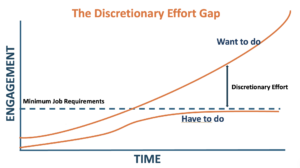
The worst bosses? They don’t take the time to listen. They give orders. They scream when something isn’t done right. They don’t take the time to understand why. Under their worst boss, people give minimum successful effort or quietly quit. Some are working a second full time job and cashing two paychecks.
I lived both sides of this.
I had the privilege of working for an amazing leader. He believed in me. He listened and made me feel valued and heard. Together we achieved 770% growth and added 10 months of working capital. I achieved way more than I thought I was capable of.
I also worked for someone who had no interest in hearing what I had to say. She expected me to do exactly as I was told. It was her way or the highway. Under her, I did my job well. But I never went above and beyond. I did what I had to do and nothing more
Same person. Completely different results. The only variable was the leader.
I call that the Discretionary Effort Gap. The size of that gap is deeply impacted by your leadership. And it is costing you more than you think. According to Gallup, a single disengaged employee costs 34% of their annual salary. Do the math on your team.
It starts with getting people in the right seat. A seat where they can capitalize on their natural strengths. Where their work energizes them instead of draining them. When someone is in the wrong seat, it doesn’t matter how talented they are. They will never fully perform over an extended period. It is like asking a right-handed person to write with their left hand all day. They can do it for a while. But it will drain their energy. The result is frustration for them and for you.
The next job is creating an environment where they can thrive.
Think about a plant.
Give it rich soil, the right amount of water, and enough sunlight, and it grows beautifully. It becomes exactly what it was meant to be. Put that same plant in the wrong soil, deny it what it needs, and it withers. It never reaches its potential.
People work the same way.
The soil is the environment a leader creates. In the right environment, people flourish. Get it wrong, and they wither.
It starts with a leader who believes in their people more than they believe in themselves. A leader who listens, who makes them feel valued, who holds a high standard and who gives them the courage to become their best and achieve more than they thought possible.
That is what the best boss stories are really about. It is not just that those leaders believed in their people. It is that they believed in them more than their people believed in themselves. They saw who someone could become before that person could see it. Then they helped them believe it and gave them the courage to try.
If You’re Serious About Results
First, get your people in the right seats. Roles where they can capitalize on their natural strengths. Where the work energizes them instead of draining them. When someone is in the wrong seat, no amount of great leadership will fully compensate. You owe it to them and to your business to get this right.
Then be a great boss. Don’t wait for a formal review to tell someone they are doing great work. Catch people doing things right and tell them. Give them genuine praise: truthful, specific, and personal. Do it in the moment. And when someone deserves recognition, say it publicly. Nothing builds a culture faster than a leader who celebrates people in front of their peers.
In EOS, we use a tool called the Quarterly Conversation to build on this. It is not a performance review. It is an informal conversation between a leader and a direct report, four times a year, designed to build the relationship. It starts with positive inquiry. You ask “What is working?” Then you ask questions like “What are you most proud of achieving?” and “What did you do that made the difference?” And then you give genuine praise. Not generic. Not a casual “great job.” Praise that is truthful, specific, and personal. Praise that lets someone know you actually see them.
When leaders do this consistently, something shifts. Team members stop feeling like a resource. They start feeling like they matter. And when people feel like they matter, they bring their best. And they become their best.
In Short
One of the most powerful things you can do as a leader costs nothing. It is the decision to make your people feel seen, valued, and heard.
When you do that consistently, something remarkable happens. People grow. They perform at levels they never thought possible. Your business gets stronger. Your bottom line gets better. And when you look back on your career, you will not just have built a great company. You will have built great leaders.
It can start today with the next conversation you have.
Are you creating an environment where your people are truly thriving?
Ready to close the Discretionary Effort Gap on your team? Let’s talk about how I can help.
Reach out to me at amy.holtz@eosworldwide.com and let’s set up a time.