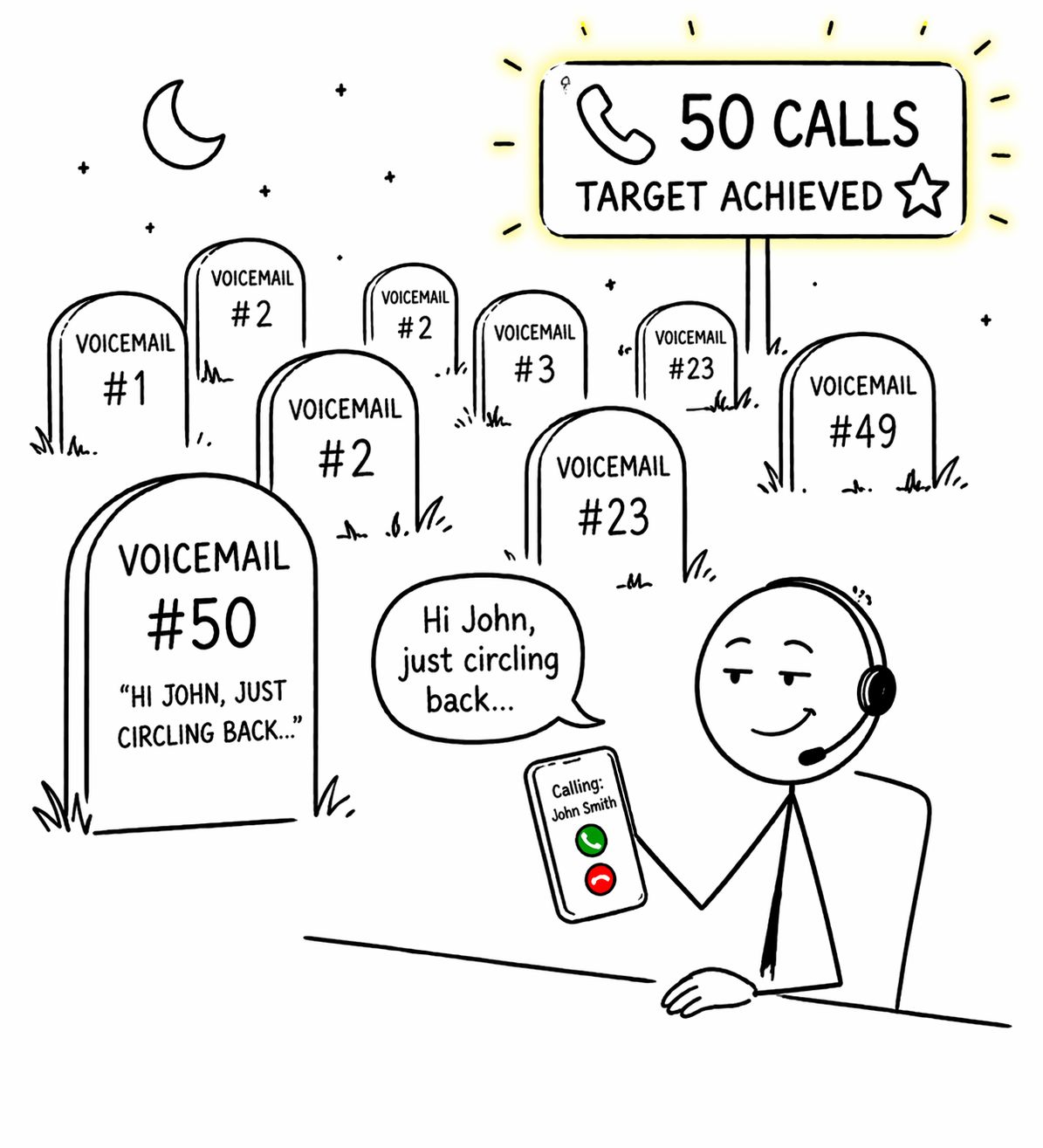
Most scorecards don’t fail because of bad metrics.
They fail because people optimize them exactly as designed.
This shows up in something called Goodhart’s Law:
“When a measure becomes a target, it ceases to be a good measure.”
Metrics are powerful when they create focus and drive accountability.
But the moment pressure or incentives get attached, people start optimizing for the number, not what the number was meant to represent.
You’ve probably seen this:
– Sales teams aggressively discounting to hit revenue targets
– Support teams closing tickets quickly instead of solving problems
– Product teams shipping features instead of improving outcomes
– Leaders tracking activity instead of real progress
None of this is bad intent. It’s perfectly rational behaviour given the system.
The mistake most leadership teams make: they expect one number to carry too much weight.
A simple fix – instead of one number, think in threes.
1. Outcome (what you actually want): e.g. Sales
2. Activity (what drives it): e.g. Proposals
3. Two constraints on that activity:
– Volume: 3 proposals/week
– Quality: 1 shortlisted/week
Now you’ve created tension in the system.
You can’t just spam proposals (quality catches it).
You can’t be overly selective (volume catches it).
And that tension is what drives the right behaviour.
A simple test for each measurable (or set of paired measurables) on your scorecard: “If someone optimized this number perfectly, would it create the outcome we actually want?”
What’s one measurable in your business that gets hit… but doesn’t actually achieve the outcome?